
In aeronautics, failure is never an option. Electronic systems must operate reliably under demanding environmental conditions, often for decades, while the consequences of a faulty component can be far more serious than in terrestrial applications. Printed circuit boards (PCBs) may be smaller than systems aboard aircraft, still they are essential for the operation of flight- control, navigation, and monitoring systems.
This makes the manufacturing of aerospace PCBs subject to exceptionally stringent and rigorous requirements. Quality is not just about final inspection; it must be built into every stage of the manufacturing process. This is why EN 9100 certification comes into play.
Based on the internationally recognized AS9100 aerospace quality-management standard, the EN 9100 framework is designed to ensure that organizations serving the aerospace and defense sectors can consistently meet demanding quality, traceability and risk-management requirements.
For PCB manufacturers, this certification requires a disciplined procedure to control processes, suppliers, production data and potential risks across the product lifecycle.

Fig. 1 TI TIDA-070001 → space-grade power electronics / reliability (source: TI)
Why aerospace PCBs demand a different approach
Aerospace systems operate in environments that can put considerable stress on electronic assemblies. Thermal shocks, vibration, humidity, pressure changes and EMI can all impact overall performance. PCBs may also be subject to radiation or other environmental stresses. At the same time, aerospace equipment typically has long operational lifetimes.
A PCB manufactured today may have to be available for many years to come, making consistency and documentation key requirements. A manufacturing process producing acceptable boards may not be sufficient when even a small probability of failure can cause serious consequences.
Board materials, copper traces, surface finishes, solderability, component mounting and cleanliness can all influence reliability. Manufacturing defects such as imperfect solder joints, voids, delamination, contamination or microscopic cracks can become critical after prolonged exposure to thermal or mechanical stress, even if they may not cause an immediate failure.
For these reasons, aerospace or aeronautics PCB manufacturing requires controlled processes capable of producing repeatable results and providing evidence that those processes have remained under control.
What EN 9100 brings to PCB manufacturing
EN 9100 is the European aerospace version of the 9100 family of quality-management standards. While it adopts the principles of ISO 9001, it adds more requirements reflecting the specific needs of aviation, space and defense organizations.
In particular, more emphasis is given to risk management. Rather than identifying problems only after they have occurred, organizations are expected to identify potential risks and implement corrective measures. For a PCB manufacturer, this means not only selecting materials and suppliers attentively, but also focusing rigorously on production qualification, inspection, testing and delivery.
The standard also strongly emphasizes product safety, configuration management, fake-part prevention, special processes and traceability to provide final users with important information such as the origin and history of individual materials and components.
Full traceability records
Traceability is a key feature of aerospace manufacturing and giving full evidence is an obligation for PCB manufacturers.
Detailed records about the board materials, the production equipment and process flows, inspection results, operators, and any subsequent rework or repair can become invaluable if a quality problem is flagged. Instead of examining the whole production history, the manufacturer can identify potentially affected batches or products and determine where the problem originated.
Traceability also supports configuration control. Aerospace customers may require a specific PCB design, material combination or manufacturing process to remain unchanged unless a formal authorization has been released. After all, reliability may be affected by apparently minor modifications.
Controlling the manufacturing process
EN 9100 certification encourages PCB producers not to rely primarily on end-of-line inspection.
Inspection remains essential, but quality must first be established through controlled manufacturing processes. PCB production involves a long chain of steps: material preparation, imaging, etching, drilling, plating, solder-mask application, surface finishing, assembly and inspection. Each operation can potentially introduce unwanted variation into the final product.
Process parameters therefore need to be defined, monitored and controlled. Manufacturing equipment must be maintained and calibrated, while employees need the necessary training and competence to perform their assigned tasks.
For aerospace applications, this process discipline can be especially important for so-called special processes whose results cannot always be completely verified by subsequent visual inspection. Processes like welding, soldering, and plating often require qualified procedures, equipment and personnel.
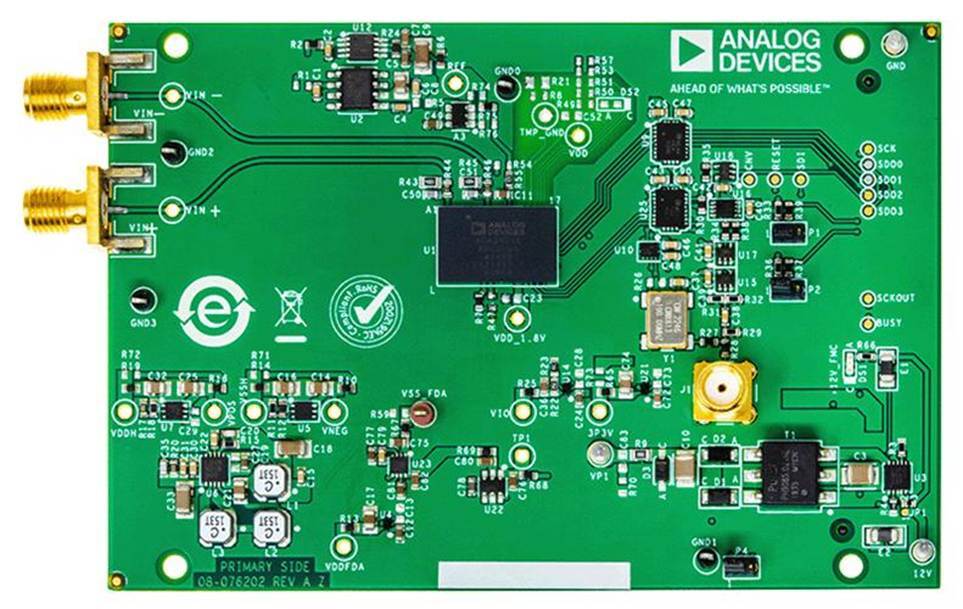
Fig. 2 ADI HMC1087F10 → PCB construction / thermal management / aerospace (source: Analog Devices)
Supplier quality is part of PCB quality
The supply chain must be as reliable as a PCB manufacturer itself. This becomes increasingly relevant as global supply chains become more complex.
Aerospace programs can involve complex supply networks covering laminate materials, copper foil, soldering materials, components, chemicals, surface finishes and specialized manufacturing services. EN 9100 therefore places significant emphasis on controlling externally provided products and services.
Supplier qualification, performance monitoring and incoming inspection become important elements of the overall quality system, making a manufacturer confident that purchased materials and services meet the specified requirements.
Effective supplier management therefore extends the aerospace quality philosophy beyond the boundaries of the PCB factory itself.
Nonconformities and continuous improvement
No manufacturing system is completely immune to problems. What distinguishes a mature quality system is how effectively those problems are identified, contained and prevented from recurring.
Organizations must manage nonconforming outputs and take the necessary corrective action in accordance with EN 9100.
In PCB manufacturing there may be a need to investigate a soldering flaw, plating problem, dimensional deviation or material anomaly.
The objective is not simply to repair or reject the affected boards. Manufacturers must determine the underlying cause and establish whether changes to the process are necessary to prevent recurrence.
This creates a continuous-improvement loop: identify a problem, understand its root cause, implement corrective action, verify its effectiveness and use the resulting knowledge to improve the manufacturing system.
For aerospace customers, this ability to learn from manufacturing data can be almost as important as the original quality-control procedure.
Certification demonstrates manufacturing discipline
It is important to distinguish between certification and product quality. EN 9100 certification does not mean that every PCB leaving a factory is automatically defect-free. Rather, it demonstrates that the organization operates a quality-management system that has been independently assessed against aerospace-specific requirements.
This distinction matters because aerospace customers need confidence not only in a particular batch of PCBs, but also in the manufacturer's capability to deliver consistent quality over time.
Certification can therefore serve as an important element of supplier qualification. It provides end customers with evidence that processes, risks, documentation, personnel, suppliers and corrective actions are managed within a structured framework.
For PCB manufacturers, achieving certification can consequently strengthen their position in the aerospace supply chain and open access to programs where aerospace-specific quality requirements are mandatory or strongly preferred.
From compliance to competitive edge
The work to attain and maintain EN 9100 certification is well worth the investment as it provides benefits beyond regulatory or customer compliance.
Implementing and maintaining documented processes, employee training, internal audits, supplier controls, risk assessment and constant monitoring must thus be a continuous commitment rather than a spot exercise.
A robust quality system is effective in reducing manufacturing variation, increasing process visibility, finding problems earlier and minimizing the likelihood of costly failures or rework. Stronger traceability can also accelerate investigations when problems show up.
For PCB manufacturers seeking to serve increasingly the sophisticated and electronics-reliant aerospace industry, these capabilities can become a competitive advantage.
Can every board be bullet-proof?
The aerospace industry increasingly rely on complex electronic platforms, from advanced avionics and flight-control systems to satellite communications, autonomous functions and electrified aircraft. In parallel, PCB technologies are becoming more sophisticated, incorporating high-density interconnects, advanced materials and ever demanding thermal and signal-integrity requirements.
In this environment, manufacturing quality is necessarily intertwined with product performance. A sophisticated PCB design is only as reliable as the processes used to transform that design into a physical product.
EN 9100 provides aerospace PCB manufacturers with a framework for addressing this challenge. By highlighting the importance of risk management, process control, traceability, supplier qualification, product safety and continuous improvement, the standard helps embed quality throughout the manufacturing lifecycle.
For aerospace electronics, that may ultimately be the most important role of certification. EN 9100 is not simply a certificate to proudly display in an executive’s office. It is a well-structured approach to building confidence into every process step—and, ultimately, into every board that takes to the skies.
05.11.2026
and get your PCBA quote within the next 10 minutes!